Artificial intelligence is rapidly becoming part of the operational backbone of modern wealth management firms.
What started as experimentation with chatbots and automation tools has now evolved into something much larger. Advisory firms are increasingly using AI to improve client servicing, automate administrative workflows, reduce compliance burden, streamline documentation, and create more connected operational systems.
The biggest shift is not happening in investment prediction alone.
It is happening in execution.
Wealth advisors today manage a growing number of client conversations, portfolio discussions, compliance requirements, CRM updates, internal approvals, and follow-ups. As firms scale, operational complexity grows faster than most teams can handle manually.
This is why AI platforms for wealth management are gaining attention across the industry.
The right platform can help firms:
- Reduce manual administrative work
- Improve operational efficiency
- Automate documentation workflows
- Strengthen compliance readiness
- Enhance advisor productivity
- Create more consistent client servicing processes
However, not all AI platforms solve the same problem.
Some focus on portfolio analytics.
Some specialize in document intelligence.
Others focus on meeting workflows, CRM automation, or operational orchestration.
Understanding these categories is critical before evaluating solutions.
What Wealth Management Firms Actually Need From AI Platforms
Many firms approach AI looking for “automation.”
But operational reality inside advisory businesses is more nuanced.
The biggest challenges are usually not isolated tasks.
They are workflow coordination problems.
A single client interaction may involve:
- Meetings
- Portfolio reviews
- CRM updates
- Compliance documentation
- Follow-up communication
- Internal coordination
- Research workflows
- Client onboarding steps
When these systems remain disconnected, operational inefficiencies compound over time.
As a result, modern wealth management firms increasingly look for AI platforms that can support:
Operational Intelligence
The ability to capture, organize, and structure information from conversations, documents, and workflows.
Workflow Automation
Reducing repetitive manual processes such as follow-up coordination, CRM maintenance, and reporting workflows.
Compliance Support
Generating structured documentation, maintaining audit trails, and improving operational consistency.
Meeting Intelligence
Turning advisor-client conversations into summaries, action items, insights, and structured operational outputs.
Enterprise Governance
Supporting secure AI adoption with approval layers, governance controls, auditability, and data privacy protections.
Categories of AI Platforms in Wealth Management
The AI ecosystem in financial services is becoming increasingly specialized.
Different platforms solve different operational problems.
Understanding these categories makes evaluation easier.
1. AI Meeting Intelligence Platforms
These platforms focus on capturing and structuring information from client meetings.
Core capabilities often include:
- Real-time transcription
- Meeting summaries
- Action item extraction
- Follow-up drafting
- Client insight tracking
- CRM-ready outputs
For wealth management firms, this category is becoming increasingly valuable because advisor conversations contain critical operational and compliance information.
The challenge is not simply recording meetings.
It is converting conversations into structured execution.
Some platforms now extend beyond note-taking into workflow coordination and operational automation.
2. AI Workflow Automation Platforms
Workflow-focused AI platforms help automate operational coordination across systems.
Examples include:
- CRM synchronization
- Internal approvals
- Task routing
- Client onboarding workflows
- Follow-up sequences
- Operational tracking
These systems are particularly useful for firms experiencing operational bottlenecks as client volume increases.
Rather than relying on disconnected manual processes, workflow AI platforms help firms standardize execution.
3. AI Document Intelligence Platforms
Document-heavy workflows remain a major challenge in wealth management.
Advisory firms often work with:
- Custodian statements
- Compliance documents
- Financial reports
- Client onboarding paperwork
- Portfolio summaries
- Tax-related documentation
Document intelligence platforms use AI to:
- Extract structured data
- Analyze files
- Organize information
- Reduce manual review work
- Improve operational accessibility
This category is especially relevant for firms dealing with large volumes of financial documentation.
4. AI Research and Knowledge Platforms
These platforms help advisors search, analyze, and organize information more efficiently.
Capabilities may include:
- Internal enterprise search
- Market research assistance
- Cross-document analysis
- Client history retrieval
- Knowledge organization
As advisory firms accumulate more internal information over time, centralized knowledge access becomes increasingly important.
5. AI Agent Platforms
One of the fastest-growing categories is AI agent infrastructure.
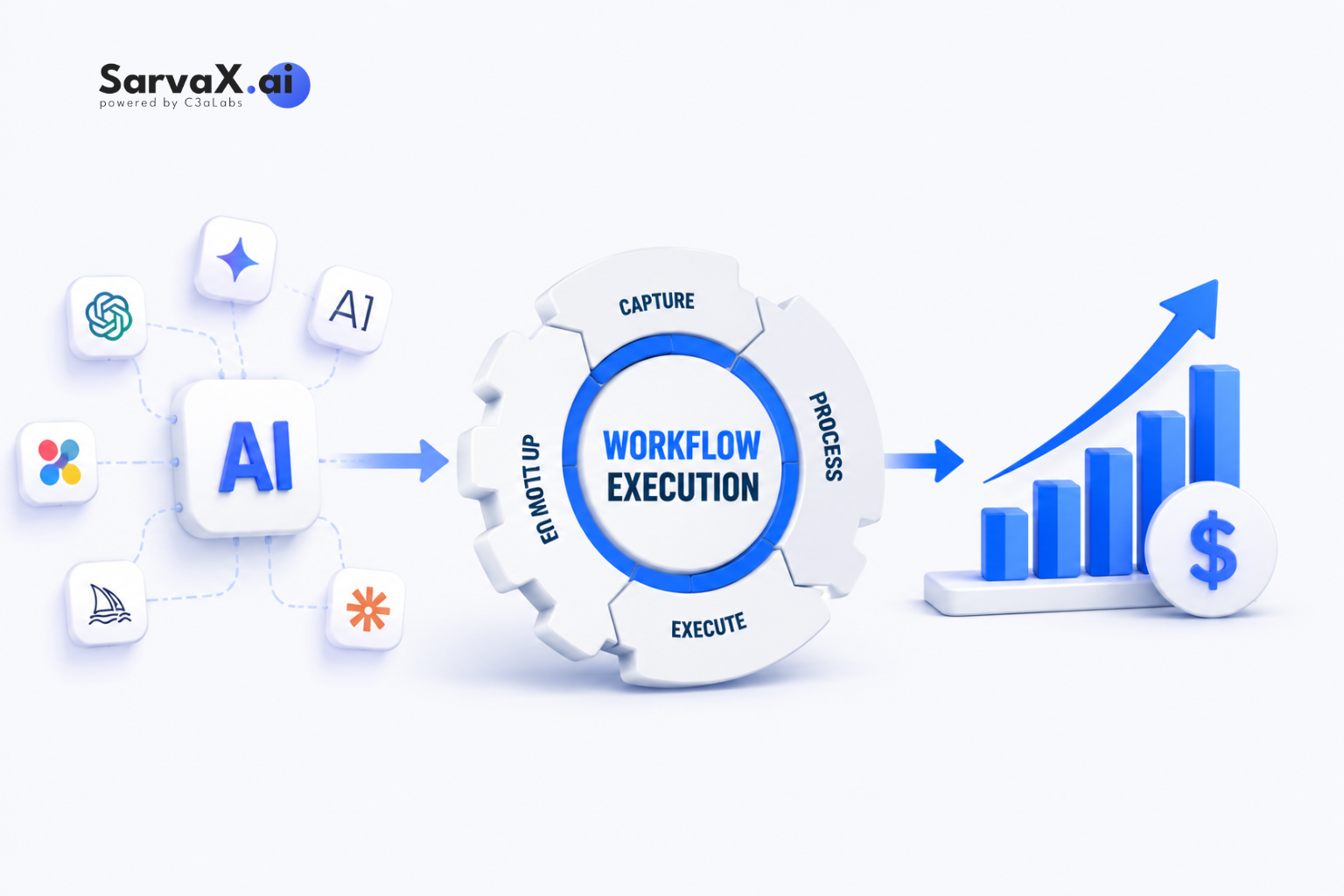
Unlike traditional AI tools that primarily generate outputs, AI agents are increasingly designed to coordinate operational workflows.
In wealth management, this may include:
- Meeting preparation
- CRM execution
- Compliance coordination
- Follow-up automation
- Operational intelligence
- Cross-system workflow execution
This category represents a major shift in how firms think about AI adoption.
The goal is no longer isolated automation.
It is operational orchestration.
What Makes an AI Platform Valuable for Wealth Management Firms
The best AI platforms are not necessarily the ones with the most features.
They are the ones that fit operational reality.
Wealth management firms should evaluate platforms based on several key factors.
Operational Fit
Does the platform align with how advisory workflows actually function?
Can it support real operational processes rather than isolated automation tasks?
Workflow Connectivity
Can the platform connect conversations, documents, CRM systems, compliance workflows, and internal coordination together?
Disconnected AI tools often create new inefficiencies instead of solving existing ones.
Security and Governance
Financial services require strong governance standards.
Important evaluation criteria include:
- Data privacy
- Approval workflows
- Audit trails
- Secure deployment
- Access controls
- Model governance
Advisor Experience
AI should reduce operational burden, not create additional complexity.
The best systems improve advisor efficiency without disrupting relationship-driven workflows.
Scalability
As firms grow, operational complexity increases.
Platforms should support:
- Team coordination
- Standardized workflows
- Process consistency
- Operational visibility
How SarvaX.ai Approaches AI for Wealth Management
SarvaX.ai approaches AI for wealth management from an operational execution perspective.
Instead of positioning AI as a standalone assistant, the platform focuses on connecting meetings, workflows, documents, operational intelligence, and execution into a unified system.
The focus is not only on generating outputs.
It is on helping advisory firms reduce fragmentation across operational workflows.
For wealth management firms, this may include:
- Meeting intelligence workflows
- Advisor preparation systems
- CRM-ready structured outputs
- Compliance documentation support
- Operational search across conversations and files
- AI-powered workflow coordination
- Enterprise AI governance
- Multi-system orchestration
The platform’s architecture is designed around AI agents that support operational continuity across the advisory lifecycle.
This is increasingly important as firms move toward AI-enabled execution rather than isolated automation tools.
Why Wealth Management Firms Are Moving Toward AI-Driven Operations
The industry is under growing pressure from multiple directions.
Firms are managing:
- Increasing compliance complexity
- Growing client expectations
- More operational overhead
- Larger information volumes
- Advisor productivity challenges
- Higher coordination demands
Manual operational systems are becoming difficult to scale efficiently.
AI platforms are emerging as a way to reduce this operational friction while improving consistency and visibility across advisory workflows.
The firms that adopt AI successfully will likely not be the ones using the most tools.
They will be the ones creating the most connected operational systems.
The Future of AI Platforms in Wealth Management
The next phase of AI adoption in wealth management will likely move beyond standalone productivity tools.
The market is increasingly shifting toward:
- AI agents
- Operational orchestration
- Workflow intelligence
- Context-aware systems
- Cross-platform coordination
- Human-in-the-loop governance
This reflects a broader industry transition.
AI is no longer being viewed only as an assistant.
It is becoming operational infrastructure.
For wealth management firms, this creates an opportunity to reduce operational overhead while improving execution quality, compliance readiness, and advisor productivity.
FAQs
What are AI platforms for wealth management firms?
AI platforms for wealth management firms are systems that help automate operational workflows, improve client servicing, manage compliance documentation, organize knowledge, and streamline advisor operations.
How is AI used in wealth management?
AI is used for meeting intelligence, workflow automation, CRM updates, document analysis, compliance support, research workflows, and operational coordination.
What are AI agents in financial advisory services?
AI agents are systems designed to coordinate operational workflows, structure information, trigger actions, and support execution across advisory operations.
Can AI platforms help with compliance workflows?
Yes. Many AI platforms now support compliance-ready documentation, audit trails, structured workflows, and operational governance processes.
What should wealth management firms look for in an AI platform?
Firms should evaluate:
- Operational fit
- Workflow integration
- Security
- Governance controls
- Scalability
- Advisor usability
- Compliance support
- Workflow orchestration capabilities
Final Thoughts
The conversation around AI in wealth management is shifting rapidly.
The focus is no longer only on analytics or automation.
It is increasingly about operational execution.
Modern advisory firms need systems that can connect conversations, workflows, documentation, compliance processes, and operational intelligence into one coordinated environment.
As the industry evolves, AI platforms will likely become a core part of how wealth management firms scale operations, improve advisor productivity, and maintain operational consistency.Platforms like SarvaX.ai are part of this shift toward AI-powered operational infrastructure for modern advisory firms.