Most wealth management firms are already experimenting with AI.
Some are using AI to summarize meetings.
Some are testing copilots internally.
Others are automating small administrative tasks across operations.
But very few firms are actually seeing meaningful ROI.
Not because the technology is weak.
Because most firms are applying AI to isolated tasks instead of improving how the business executes work across the client lifecycle.
And that distinction matters more than people realize.
The real value of AI in wealth management is not about generating notes faster or reducing a few manual clicks.
It’s about reducing operational friction between conversations, decisions, follow-ups, compliance, and execution.
That’s where the real ROI begins to appear.
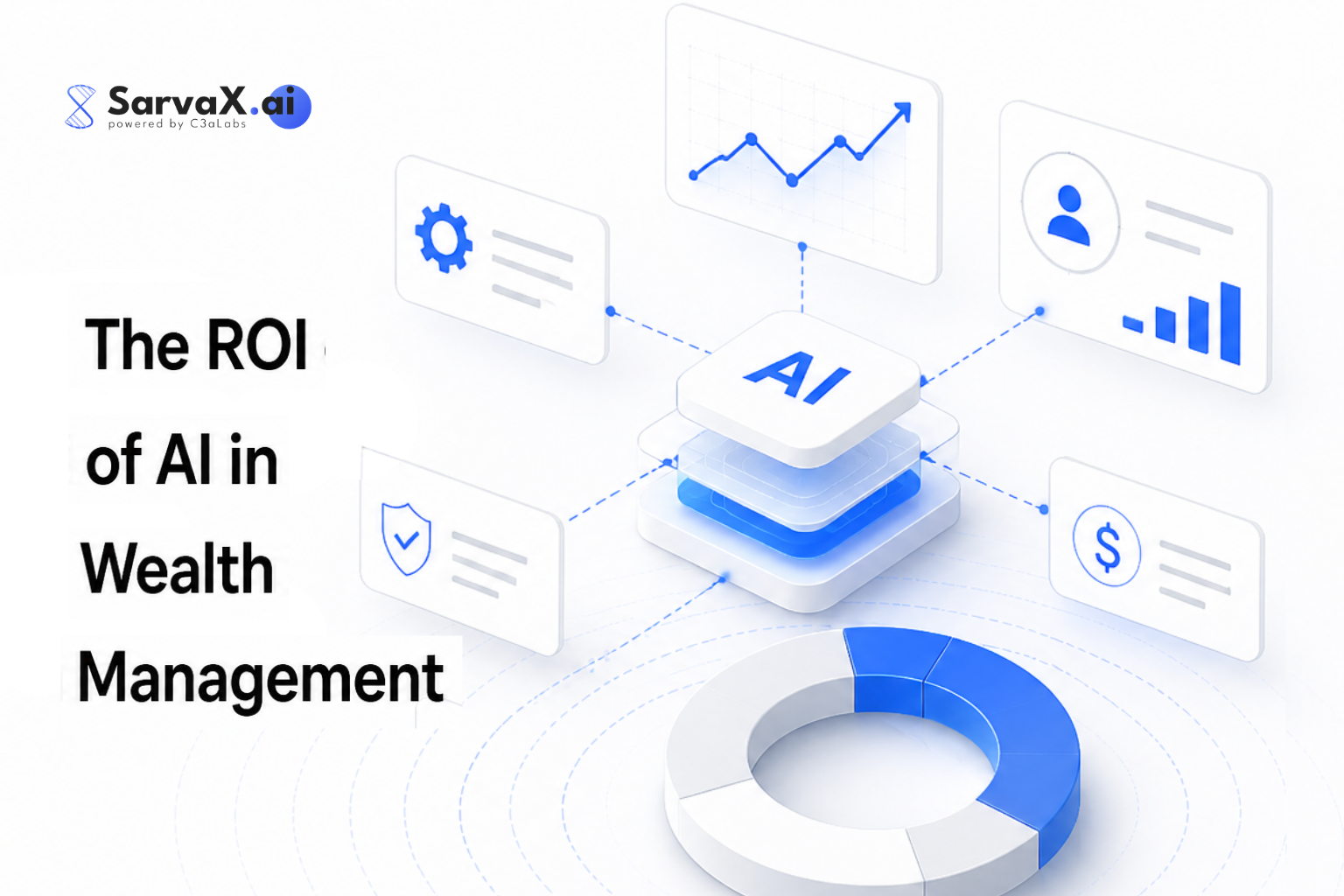
And when firms measure it properly, the impact usually shows up in three places:
- time recovered
- revenue protected and expanded
- risk reduced
Not independently.
Together.
Why ROI in Wealth Management Is Difficult to Measure
ROI in wealth management rarely appears in obvious ways.
Unlike transactional industries, advisory businesses operate through trust, timing, continuity, and relationships built over years.
That means operational inefficiencies often remain invisible until they compound.
A delayed follow-up may not seem serious today.
A missing note may not look critical in the moment.
An incomplete CRM update may feel manageable.
But over time, those small gaps begin affecting:
- client experience
- relationship continuity
- retention
- upsell opportunities
- operational visibility
This is why many firms underestimate how much revenue and operational stability are quietly lost through fragmented workflows.
The problem usually isn’t a lack of effort.
It’s that too much execution still depends on memory, manual coordination, and disconnected systems.
The First Layer of ROI: Recovering Advisor Time
Most advisors spend a surprising amount of their week on work that does not directly create revenue.
After every client interaction, there’s another operational cycle:
rewriting notes, updating CRM systems, drafting follow-ups, organizing documentation, preparing compliance records, and trying to ensure nothing important gets missed.
The meeting ends.
Then the administrative workload begins again.
Over time, this creates operational drag across the firm.
Not because the tasks themselves are unnecessary.
Because the workflows around them are fragmented.
What Changes When Workflows Become Connected
High-performing advisory firms are starting to treat meetings differently.
They no longer see meetings as isolated conversations that need to be manually processed afterward.
Instead, meetings become structured operational inputs.
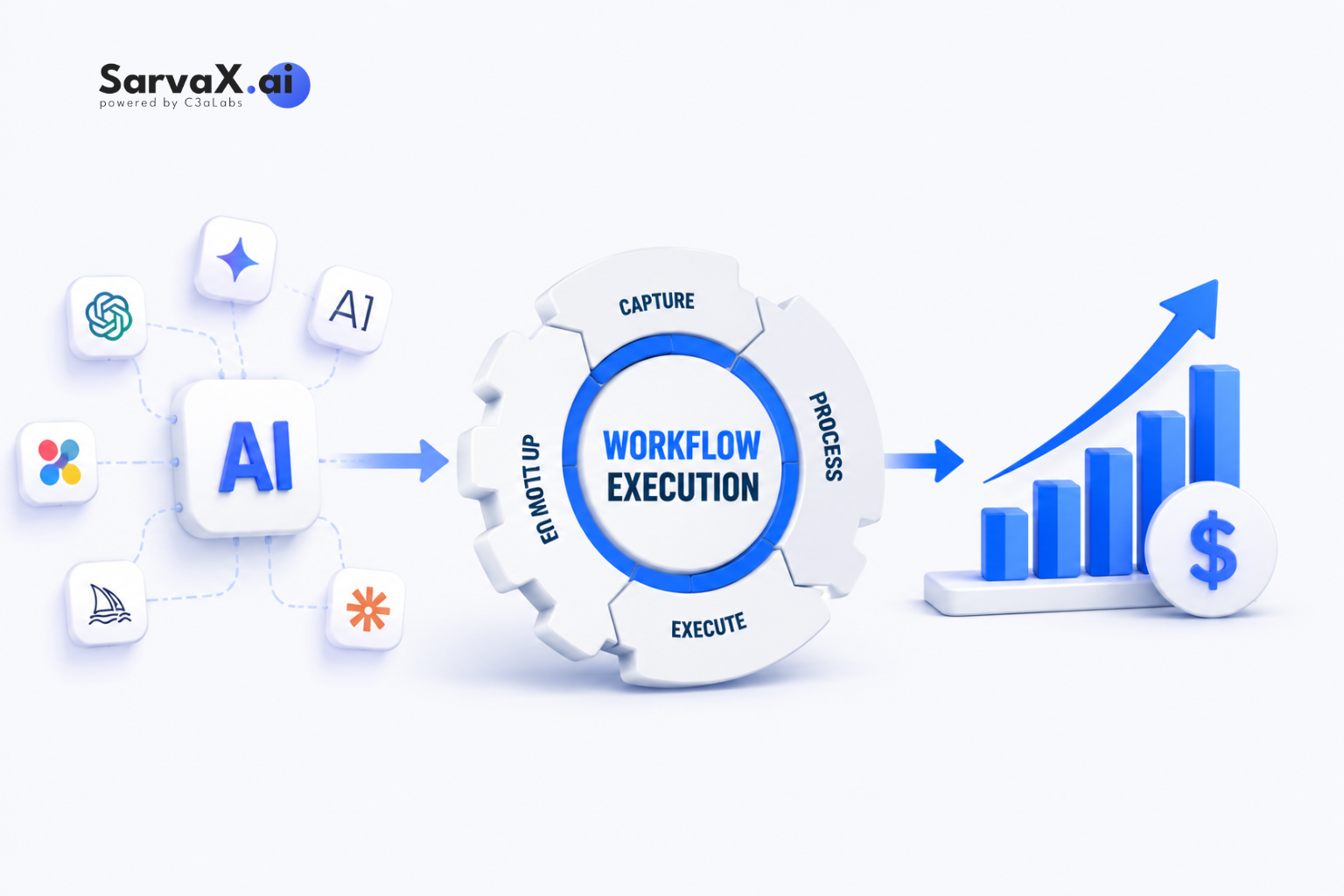
Client discussions automatically flow into:
- summaries
- action items
- follow-ups
- CRM updates
- compliance records
- workflow coordination
The work continues from where the conversation ended.
It does not restart manually afterward.
That shift changes how advisors spend their time.
Instead of constantly rebuilding context, teams spend more time on:
- client relationships
- strategic conversations
- planning
- growth
This is where time ROI becomes meaningful.
Not because firms save a few minutes.
Because operational capacity expands without increasing organizational complexity.
The Revenue Problem Most Firms Don’t See
Revenue in wealth management is rarely lost in obvious ways.
Most client meetings actually go well.
The client is engaged.
The conversation is productive.
There are clear signals, concerns, priorities, and opportunities.
And then execution slows down.
Follow-ups get delayed.
Next steps become unclear.
Important context gets buried inside notes or scattered systems.
Over time, opportunities disappear quietly.
This is one of the biggest operational leaks inside advisory businesses.
Not because advisors lack expertise.
Because the systems connecting conversations to execution are weak.
The Firms Growing Faster Operate Differently
The best advisory firms do not rely heavily on memory and manual coordination after meetings.
They operate through structured execution.
Every conversation creates momentum.
Decisions become actions.
Actions become tracked workflows.
Client context remains connected across systems.
That changes how revenue moves through the organization.
Instead of treating meetings as documentation exercises, firms begin treating them as execution triggers.
The impact becomes visible quickly:
- faster follow-ups
- clearer ownership
- better visibility
- stronger client continuity
- fewer missed opportunities
Revenue becomes more predictable because execution becomes more consistent.
And consistency compounds.
The Most Underrated ROI Area: Risk Reduction
This is where AI becomes strategically important for wealth management firms.
Because operational risk in advisory businesses is deeply connected to documentation quality, visibility, and continuity.
Many firms still rely on fragmented compliance processes:
- scattered notes
- inconsistent records
- disconnected systems
- manual audit preparation
The issue is not that teams are careless.
The issue is that operational history becomes difficult to maintain consistently at scale.
And when firms grow, that complexity increases.
What Happens When Compliance Becomes Continuous
Structured AI systems fundamentally change this workflow.
Instead of documentation becoming a separate process after the work is done, documentation becomes part of the workflow itself.
Client interactions are captured automatically.
Decisions remain connected to context.
Records stay structured and searchable.
Audit readiness becomes continuous instead of reactive.
That changes the operational posture of the firm.
Instead of scrambling during audits or compliance reviews, firms maintain visibility by default.
The result is not just reduced compliance exposure.
It’s stronger organizational trust.
And in wealth management, trust is operational leverage.
The Real ROI Comes From Compounding Effects
Most firms evaluate AI as a collection of isolated efficiencies.
But the real value appears when workflows become connected across the business.
When advisors recover time, they spend more energy on clients.
When follow-through improves, more opportunities convert.
When visibility improves, compliance becomes easier to manage.
When systems stay connected, execution becomes more reliable.
Everything compounds together.
This is why firms focused only on “AI tools” often fail to see transformational impact.
The firms creating measurable ROI are building execution systems.
Why Many AI Initiatives Fail
A large number of firms adopt AI without changing how work actually flows through the organization.
They implement:
- note generators
- isolated copilots
- disconnected automations
But the operational structure underneath remains fragmented.
So the business experiences small efficiency gains without meaningful transformation.
That’s why many AI implementations plateau quickly.
Because AI alone does not fix execution fragmentation.
Connected workflows do.
The Shift Wealth Management Firms Are Now Making
The firms seeing the strongest results are moving toward connected execution infrastructure.
Meetings connect directly to workflows.
Conversations trigger actions automatically.
CRM systems update continuously.
Compliance records remain structured in the background.
Nothing depends entirely on memory anymore.
And that changes how the organization operates at scale.
Because once execution becomes structured, firms gain:
- visibility
- continuity
- consistency
- scalability
- operational trust
This is the real operational shift happening inside modern wealth management firms.
Final Thought
AI alone does not create ROI.
Execution does.
The firms that will outperform over the next few years will not necessarily be the firms using the most AI tools.
They will be the firms that:
- capture every client interaction properly
- maintain continuity across workflows
- turn conversations into actions immediately
- reduce operational leakage
- stay compliant without slowing execution down
Because in wealth management, growth is rarely limited by intelligence.
It is usually limited by execution consistency.
And the firms that solve that problem first will compound faster than everyone else.
SarvaX.ai helps wealth advisory firms turn client conversations into structured execution systems.
From follow-ups and CRM coordination to workflow automation and compliance-ready documentation, SarvaX.ai connects conversations to outcomes automatically.
So meetings no longer end as scattered notes.
They continue as execution.