Most client meetings feel productive in the moment.
The client is engaged. The conversation flows well. There are clear signals, intent, and sometimes even buying interest.
And then nothing happens.
Follow-ups get delayed. Notes are incomplete. CRM updates are missed. Important details fade.
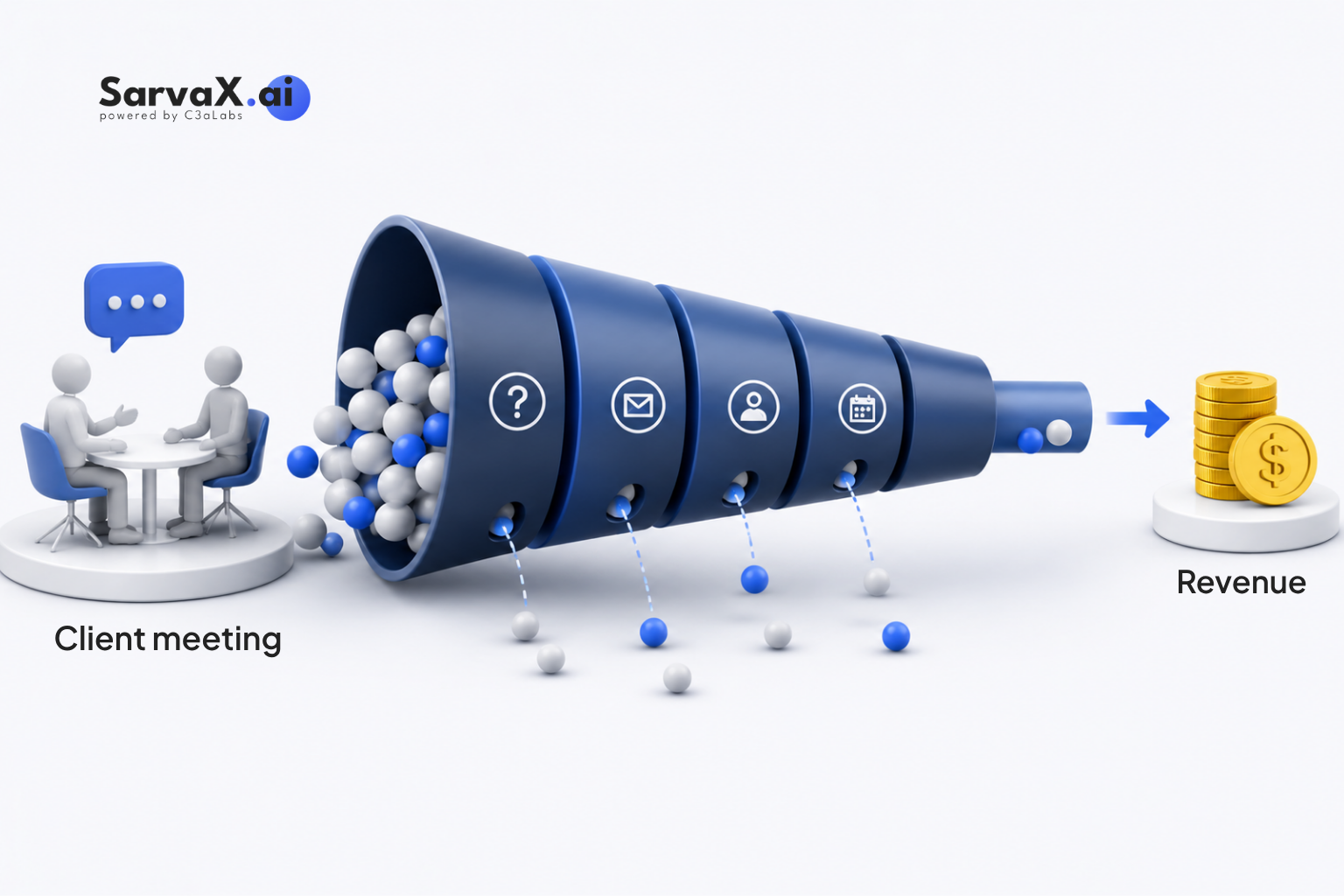
This is where most revenue is actually lost not before the meeting, but after it.
The real problem after client meetings
The issue is not the meeting itself.
It’s what happens once the meeting ends.
Most advisory workflows look like this:
- Notes are written loosely or not at all
- Follow-ups depend on memory
- CRM updates are pushed to “later”
- Action items are not clearly defined
- Client intent gets lost in scattered information
So even when a meeting creates opportunity, it doesn’t turn into execution.
And if there’s no execution, there’s no revenue.
Why this keeps happening
It’s not a skill problem.
It’s a system problem.
Most advisors are working with disconnected tools:
- One place for notes
- Another for CRM
- Another for tasks
- Another for communication
Nothing is connected.
So after every meeting, you’re basically doing the same work again:
- Recalling what was said
- Rewriting context
- Figuring out next steps
- Trying not to miss follow-ups
This slows everything down and increases the chances of things slipping.
What gets lost between meetings and execution
A lot more than people realize:
- Follow-ups that should have been sent
- Client intent signals that were never captured properly
- Opportunities that were discussed but not tracked
- Action items that were never assigned
- Context that disappears after a few hours
Each of these seems small.
But together, they create a steady leak in revenue.
The shift: from conversations to execution
High-performing advisory teams don’t treat meetings as isolated events.
They treat them as the starting point of execution.
That means:
- Conversations don’t end in notes
- They end in actions
- Follow-ups
- Decisions
- Updated systems
The meeting is not the output.
Execution is.
What needs to change in the workflow
1. Capture every meeting properly
If a meeting isn’t captured clearly, everything after it breaks.
Key points, intent, objections, and decisions need to be recorded in a structured way — not just scattered notes.
2. Turn conversations into actions immediately
Every meeting should produce clear next steps:
- Follow-ups
- Tasks
- Deadlines
- Ownership
If actions are not created immediately, they get lost.
3. Keep CRM updated without manual effort
CRM should not depend on discipline.
It should reflect what actually happened in the meeting automatically and consistently.
4. Follow-ups should not depend on memory
Follow-ups are where deals are won or lost.
They should be:
- Immediate
- Context-aware
- Based on real conversation points
Not delayed or generic messages sent later.
5. Make execution continuous, not manual
Work should not restart after every meeting.
It should continue from where the conversation ended.
What changes when this is fixed
When client conversations are properly connected to execution:
- Follow-ups stop getting missed
- Deals don’t go cold unnecessarily
- Advisors save hours every week
- Client experience becomes consistent
- Revenue becomes more predictable
The work doesn’t increase.
It becomes more structured.
Final thought
Client meetings don’t create revenue by themselves.
Execution does.
If conversations are not turning into actions, then value is being lost every single day without visibility.
The difference between a good advisor and a growing advisory business is not better conversations.
It’s what happens after them.
SarvaX.ai helps advisory teams turn client conversations into structured actions, follow-ups, CRM updates, and compliance-ready documentation — without manual effort.
So every meeting leads to execution, not lost opportunity.